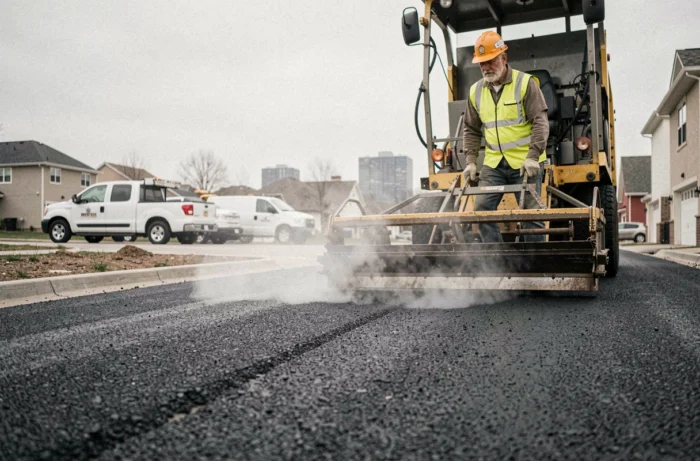
Once laid and compacted, hot-mix asphalt forms a smooth, black, durable surface. Yet its lifespan can vary threefold depending on the installation conditions, the base beneath it and the maintenance it receives over the years. Understanding what really wears down this bituminous surface makes it possible to act before the first cracks spread.
Bond between layers: the invisible factor that shortens asphalt’s lifespan
Have you ever noticed sections of asphalt peeling away even though the surface still looks to be in good condition? The problem often lies beneath the visible layer: the bond between the different layers of the pavement.
Before hot-mix asphalt is laid, a tack coat is applied to the base. This thin film of binder ensures adhesion between the old surface and the new wearing course. If it is unevenly applied, or applied to a dirty or damp base, the layers behave like two sheets stacked on top of each other without any glue.
A Swiss case study presented by the PRODO group in 2023 links poor bonding to a 30 to 50% reduction in lifespan. A complete lack of bonding makes the problem even worse. The lifespan of hot-mix asphalt therefore depends just as much on this often-overlooked step as it does on the quality of the bituminous mix itself.
This is a detail that homeowners who have their driveway resurfaced rarely check. During the work, look for signs that the contractor cleans the base, applies a bitumen emulsion before laying the asphalt and allows the binder to break before proceeding. These are good indicators of careful workmanship.
Hot-mix asphalt and weather: what really accelerates deterioration
The bitumen that binds the aggregates together ages under the combined effects of sunlight, water and temperature fluctuations. Each of these factors acts differently.
UV radiation and bitumen oxidation
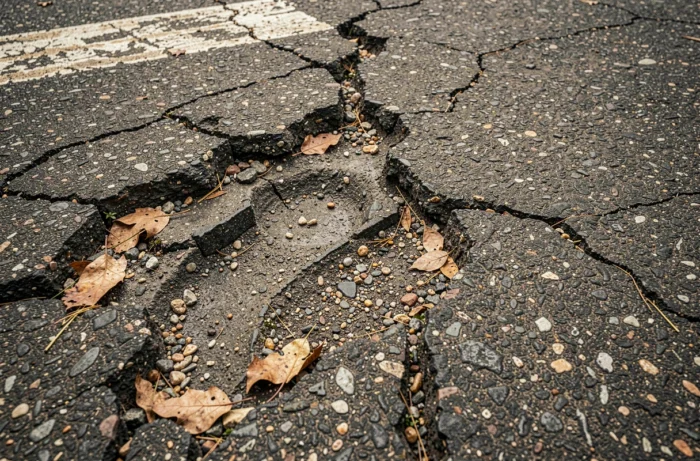
Bitumen is a petroleum derivative. When exposed to ultraviolet rays, it oxidizes and gradually loses its flexibility. The surface becomes brittle and small cracks appear (a process known as alligator cracking). These microcracks then allow water to seep in, accelerating deterioration deeper down.
Freeze-thaw cycles and water infiltration
Water is the number-one enemy of cracked asphalt. It seeps into cracks, freezes in winter, expands and mechanically widens each one. When it thaws in spring, it leaves cavities behind. In some regions, this cycle repeats dozens of times each season, turning a small crack into a pothole within just a few years.
On a private driveway, the problem is often made worse by poor rainwater drainage. If water pools on the surface instead of draining to the sides, it will always find a way to seep in.
Preventive asphalt maintenance: simple steps that extend its lifespan
Waiting until a crack runs across the entire driveway before doing anything is like waiting for a cavity to reach the nerve before going to the dentist. Maintaining hot-mix asphalt means taking simple action early.
- Seal cracks as soon as they appear with a suitable bituminous sealant. A crack just a few millimetres wide can be treated in an hour. If left open through winter, it may require repairs across several square metres.
- Maintain proper drainage around the asphalt surface. Drains, channels and slopes should be kept clear so water does not pool on the pavement or around its edges.
- Clean the surface regularly with clean water to remove moss, fallen leaves and debris. Decomposing vegetation traps moisture and encourages microorganisms that attack the binder.
- Avoid leaving heavy vehicles (trucks, loaded trailers) parked in the same spot for long periods, as concentrated weight can cause localized rutting.
Why do these steps make such a difference? Because asphalt deterioration follows an exponential curve: it progresses slowly at first, then rapidly once water reaches the lower layers. Acting during the slow phase keeps the pavement in stable condition for many years.
Surface treatment or complete resurfacing: which should you choose?
When asphalt starts to show signs of wear, there are two options. The first is to treat the surface without tearing everything up. The second involves rebuilding the pavement from the base up.
Surface dressing
Cerema lists surface dressing as a maintenance technique that can preserve an existing wearing course. The process involves applying a bituminous binder followed by fine aggregates to the worn surface. This restores grip, seals microcracks and protects the underlying bitumen from oxidation.
This solution is suitable for surfaces showing signs of wear at the surface (loss of colour, reduced texture, early alligator cracking) but where the supporting structure remains sound. It costs considerably less than complete resurfacing.
Complete resurfacing
If water has reached the foundation layers, the asphalt deforms under load or potholes are multiplying, surface treatment is no longer enough. The old pavement must then be milled, the base repaired, a proper tack coat applied and new hot-mix asphalt laid.
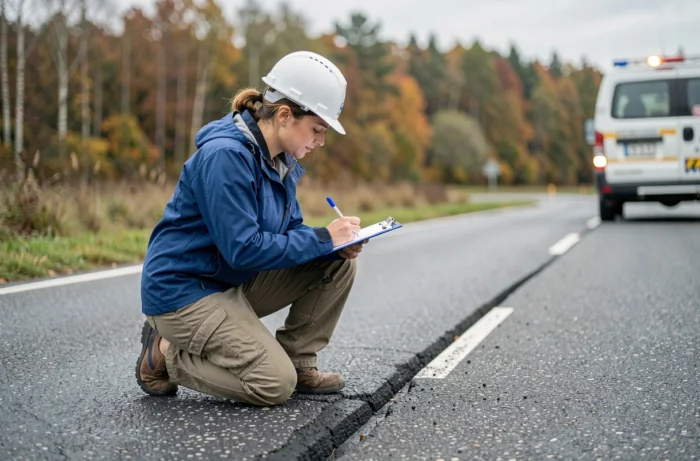
Choosing between these two options requires a visual assessment and sometimes a deeper inspection. A qualified professional can determine within minutes whether the supporting structure has been compromised.
Installation quality: mistakes that can cost ten years of service life
The asphalt mix design (aggregate type, bitumen content and production temperature) matters. Hot-mix asphalt is produced and laid at around 150 °C. Asphalt delivered too cold is less workable, compacts poorly and leaves voids where water can seep in.
Three aspects deserve particular attention during installation:
- The thickness of the layer being laid. Asphalt that is too thin for a driveway will not withstand regular vehicle traffic.
- Roller compaction. Insufficient compaction leaves excessive porosity. Over-compaction crushes the aggregates and reduces surface texture.
- The weather on the day of installation. Hot-mix asphalt laid in the rain or on a frozen base will never achieve its specified performance.
These details may seem technical, but they determine whether the pavement lasts ten years or twenty. Asphalt laid properly on a well-prepared base lasts twice as long as asphalt of the same quality installed in poor conditions.
Bituminous pavement remains a strong, durable material, provided you do not overlook what happens before, during and after installation. Bonding between layers, drainage, prompt crack sealing and choosing the right time for surface treatment are the four practical factors that distinguish asphalt that deteriorates prematurely from asphalt that does its job for many years.