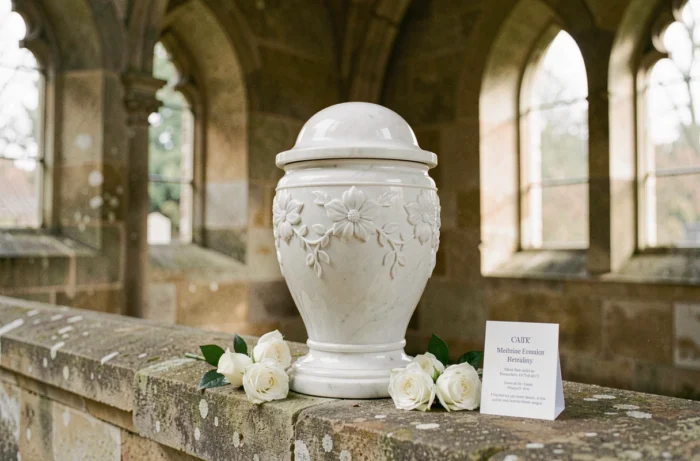
When you arrive at the cemetery office with an urn under your arm and it doesn’t fit in the columbarium niche, the problem is no longer theoretical. Before comparing materials or prices, the first thing to check is whether the cremation urn is compatible with the space provided. The dimensions, closure system and material all depend directly on the cemetery’s rules, which vary from one municipality to another.
Urn dimensions and closure: check compatibility with the cemetery
Each cemetery has its own rules, which specify, among other things, the maximum dimensions of urns accepted in columbarium niches and urn burial plots. A standard niche is often around 25 to 30 cm on each side, but some municipalities offer smaller niches or spaces with a specific shape.
Contact the town hall’s funeral services department before making a purchase. Ask for the exact internal dimensions of the niche or urn burial plot, and check whether a particular sealing system is required. Some municipalities require a screw-on airtight closure, while others accept a snap-on lid. A few require lead sealing carried out by an authorized funeral professional.
National regulations require a minimum capacity of three litres for an adult’s cremation urn (one litre for a child’s). Above this threshold, local rules take precedence. If the urn is to be sealed onto an outdoor memorial, the town hall may also require a weather-resistant material and a specific fastening method.
When comparing the price of a cemetery cremation urn, this check can help you avoid an unnecessary purchase: an urn that is two centimetres too tall or has the wrong closure system will be refused on the day of the ceremony.
Cremation urn materials: granite, wood, ceramic or biodegradable
Choosing a material is about more than appearance. It depends on the final destination of the ashes and exposure to outdoor conditions.
Stone and granite for outdoor placement
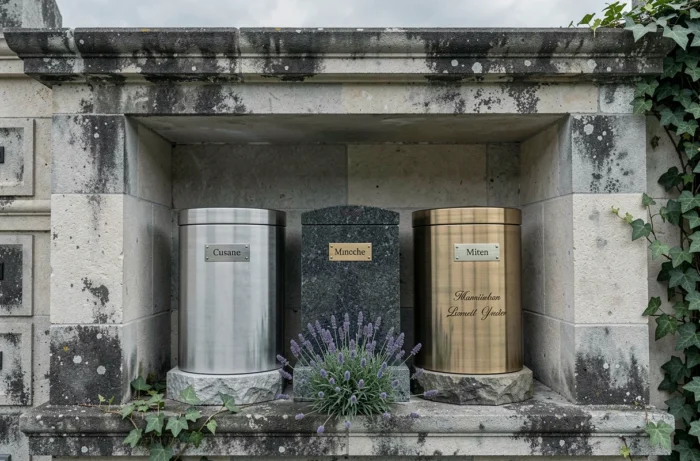
Granite and natural stone urns withstand frost, rain and UV rays. They are often sealed onto memorials or cremation monuments. Their considerable weight helps keep them stable in windy conditions. On the other hand, they offer limited variety in shape and require custom cutting, which is reflected in the price.
Wood and ceramic for a columbarium or indoor use
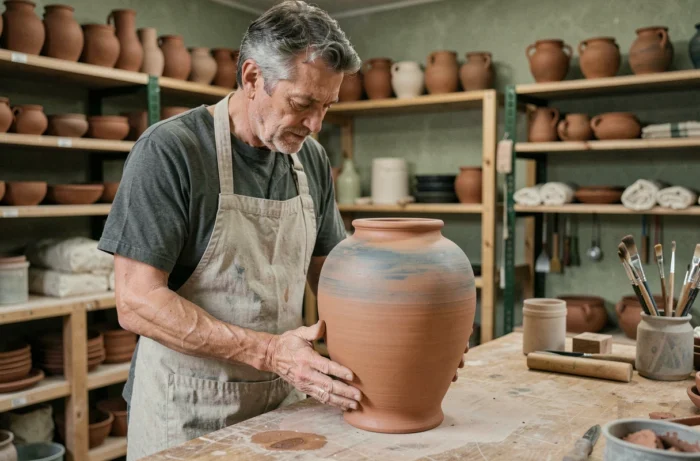
Wood (oak, walnut or mahogany) is well suited to sheltered columbarium niches. It provides a warm finish, but does not cope well with prolonged exposure to outdoor moisture. Ceramic and glazed stoneware are more moisture-resistant and come in a wide range of shapes and colours. However, these materials are still vulnerable to impact.
Biodegradable urns for scattering or burial in the ground
Made from cardboard, cornstarch or compressed salt, biodegradable urns break down naturally after burial or immersion. They are chosen when ashes are to be scattered in a memorial garden or buried directly in the ground. Their limited lifespan makes them unsuitable for permanent placement on a memorial.
Consider the following criteria before choosing a material:
- Destination: covered columbarium, underground urn burial plot, outdoor memorial, scattering in nature or at sea
- Climate exposure: an urn placed outdoors in a humid region needs to be made from a material that resists frost and moss
- Cemetery rules: some cemeteries prohibit wood or cardboard for permanent placements, while others require granite for memorials
- The wishes of the deceased or their family: a noble material such as marble or an eco-friendly option such as compressed salt reflects different values
Cremation urn prices: what affects the cost
The price of a cremation urn varies considerably depending on the material, finish and retailer. The simplest resin or cardboard models are more affordable, while sculpted granite or art ceramic urns can cost considerably more.
The material is the main cost factor. A resin or plastic urn costs significantly less than one made from carved stone. Wood falls in the mid-range, with prices varying according to the type of wood.
Personalization also adds to the cost: engraving a name and dates, carved designs, gilding or an attached bronze plaque. Each addition comes at a price. Before approving these options, check that the engraving or added elements won’t prevent the urn from fitting into the columbarium niche.
Where you buy the urn also matters. Funeral homes generally offer a selection from their catalogue and help you choose, but their markups may be higher than those of a specialist retailer or independent stonemason. Comparing several quotes is the most reliable way to determine a fair price.
Common mistakes when choosing a cemetery urn
Some problems crop up regularly and can be avoided by planning ahead.
- Buying the urn before checking the dimensions of the space: columbarium niches are not a standard size, and measurements vary from one cemetery to another
- Choosing a material that is unsuitable for its intended use: placing an untreated wooden urn outdoors in an area exposed to rain will cause it to deteriorate quickly
- Overlooking the closure system: a closure that does not comply with local rules will prevent the urn from being placed on the day of the ceremony
- Forgetting to ask whether the cemetery requires professional sealing, which adds extra cost and time
Choosing a cremation urn comes down to practical considerations: the dimensions of the space, cemetery rules and the material’s ability to withstand the intended environment. A quick call to the municipality’s funeral services department before buying is often enough to avoid most unpleasant surprises.