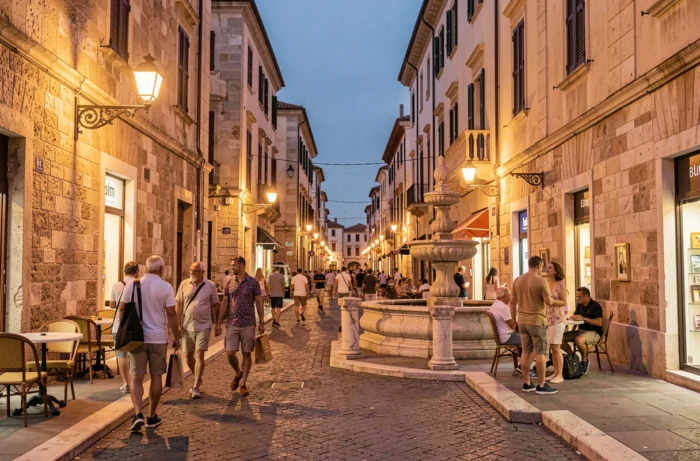
The Cardo district in Orvault serves as a daytime hub for services and transport, with its tram terminus, park-and-ride facility and shops. Once night falls, the atmosphere changes. Lighting, the presence of other people and security measures transform a place that many residents and visitors experience differently after sunset.
LED streetlights and lighting hours at Cardo: the current situation
Have you noticed that some streetlights seem whiter than before? That’s because Orvault has been switching to LED bulbs across the municipality in recent years. These lights use less energy and provide more even illumination than the old sodium lamps, which often cast an orange glow.
At Cardo, this replacement reflects a local policy decision. After a period of partial shutdowns linked to the energy crisis, the municipality decided to keep the public lighting on until midnight. A municipal order issued in May 2023 sets out these hours. The stated aim is to address residents’ concerns about safety while keeping energy costs under control.
In practice, pedestrian areas between the tram terminus and the shopping arcades remain lit in the early evening. After midnight, the gradual switch-off leaves some areas in darkness. The surface car parks and park-and-ride facility retain minimal lighting, but brightness drops noticeably compared with peak hours.
An article on safety at Cardo in the evening provides details of the exact hours and areas affected by these changes.
Evening footfall at Cardo: why the district empties out quickly
Cardo was designed as a daytime activity hub. Shops, administrative services and medical practices account for most of the foot traffic, which largely stops in the late afternoon. In the evening, visitor numbers drop quickly.
Why such a sharp contrast? Three factors explain it.
- Shops close early. Cardo has no restaurants or bars to keep people around late into the evening. Once the shutters come down, the arcades empty out.
- Tram services run less frequently in the evening, reducing the number of passengers passing through the site.
- The park-and-ride facility is less useful in the evening. Drivers who leave their cars there to take the tram during the day collect them before nightfall.
This pattern creates a tipping point. At weekends, the district becomes quiet even earlier, as several shops close on Saturday afternoons and do not open on Sundays.
A site sometimes used as a transport interchange
When the transport network is disrupted (strikes or roadworks on the A82), Cardo can become a diversion point for passengers. Aléop coach services have been rerouted to this terminus during industrial action, for example, without serving central Nantes. These occasional disruptions change evening footfall, bringing in passengers who are less familiar with the area and sometimes unsure where to go.
Night-time safety at Cardo: patrols, cameras and the limits of surveillance
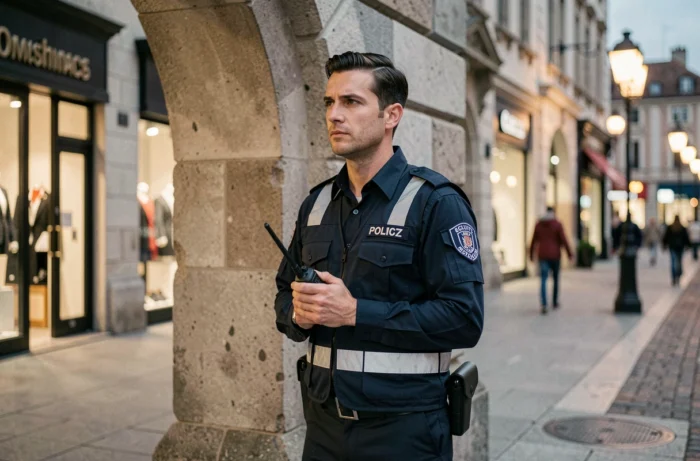
In recent years, Orvault has strengthened its surveillance resources. The budget for cameras has increased, and municipal police patrols operate at night and on weekends. These measures cover several districts, including the Cardo area.
Video surveillance acts as a passive safety net. Cameras record activity, but only deter crime if people can see them and know they are there. At a site as large as Cardo, with its car parks, covered walkways and secluded areas, coverage is not uniform.
Community outreach: a reduced role
One point deserves attention. The municipality has ended its participation in the group that employed street outreach workers in the Plaisance area, near Cardo. The decision, criticised by local stakeholders, illustrates a trade-off: more police presence, less community-based prevention.
The two approaches serve different purposes. A patrol responds to an incident. A street outreach worker identifies tensions before they escalate. Removing this link can leave a blind spot, particularly among young people who spend time in the district at the end of the day.
Street lighting and the feeling of safety: what difference does light really make?
The common assumption is simple: more light means less crime. The reality is more nuanced. A brochure from the International Dark-Sky Association, citing a study by the US National Institute of Justice, concludes that it is “highly uncertain whether powerful lighting can prevent crime.” A study published in the Journal of Epidemiology and Community Health suggests that local authorities can reduce lighting without necessarily increasing the risk of accidents or crime.
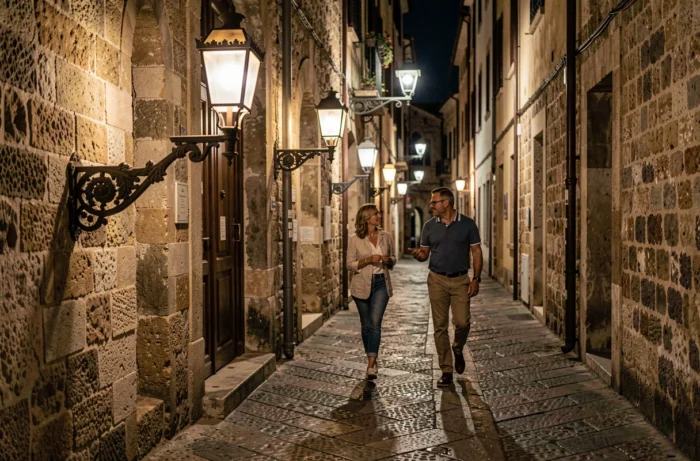
Lighting quality matters more than brightness. Downward-facing lights placed at strategic points (car park entrances, tram stops and pedestrian crossings) provide better visibility than intense but poorly directed lighting. A powerful streetlight can even create areas of deep shadow and sharp contrast, making it harder to assess potential danger.
At Cardo, the switch to LEDs supports this approach. The light is more directional and whiter, making it easier to distinguish faces and movement. The remaining issue is how long the lights stay on: after midnight, when they are switched off, the benefits disappear for the last people using the site.
Practical points to keep in mind when visiting in the evening
- Stick to areas near the tram terminus, which are better lit and busier until the last service.
- Check tram times before setting out to minimise the time spent waiting outdoors.
Cardo remains a functional district designed for daytime traffic. Its character changes in the evening, but that does not make it hostile. The measures in place (LED lighting, patrols and cameras) cover most of the hours when the site is actually busy. The main vulnerability comes after midnight, when lighting, transport and the presence of other people all disappear at almost the same time.