
Artificial intelligence, connected devices and green technologies are no longer distant promises. They are already shaping how businesses operate, how medical care is delivered and how energy flows through power grids. The European AI Act sets out transparency obligations for systems that interact directly with the public, with staggered deadlines depending on the type of system and its role in the value chain.
This regulatory framework is shaping a landscape in which technological innovation can no longer be separated from its material and legal conditions.
When electricity becomes the bottleneck for digital innovation
Articles about the technologies of tomorrow often present AI as a tool for optimization. The International Energy Agency paints a more nuanced picture: electricity demand from data centers is rising sharply, driven by servers designed to train and run inference on AI models.
This consumption is geographically concentrated. A handful of regions host most computing facilities, increasing local pressure on distribution grids. A data center that overloads a power grid node can delay connections for nearby homes or industrial sites.
The IEA highlights a useful contrast: AI could optimize the power system while increasing pressure on the grid. The algorithm that reduces waste at a wind farm runs on a server whose cooling uses water and energy. Those following these issues closely, such as Viruslab’s high-tech section, regularly document these tensions between software’s promise and physical reality.
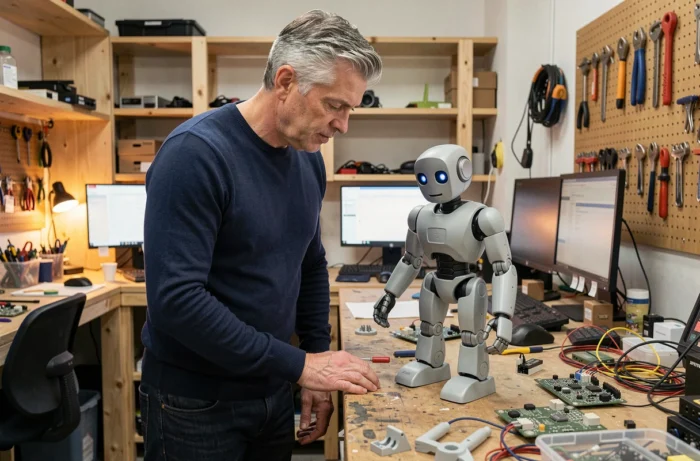
Repairability of connected devices: software as an invisible barrier
A connected health tracker whose sensor still works but whose app is no longer supported becomes e-waste. This scenario, commonplace for millions of devices, illustrates a blind spot in the discourse on innovation: lifespan depends as much on software as on hardware.
The European consultation on repairability explicitly examines requirements for software and firmware. Proposals include requiring manufacturers to provide updates for a minimum period, access to the technical information needed for repairs, and design-for-disassembly criteria.
What the European consultation actually covers
- Access to spare parts and their availability for a defined period after a product is placed on the market, to prevent obsolescence caused by component shortages.
- Publication of repair information (schematics, diagnostics, error codes), including for independent repairers and not just the manufacturer’s authorized service network.
- Software requirements: continued security updates, firmware compatibility with replacement components, and no software locks that prevent hardware repairs.
This last point is the most challenging. A smartphone whose battery can be replaced but whose operating system rejects a component not certified by the manufacturer remains, in practice, impossible for a third party to repair. Practical repairability can depend as much on access to code as on physical design.
European AI Act: obligations that affect everyday life
The European Artificial Intelligence Act does not apply only to research labs or digital giants. It sets out transparency obligations for certain AI systems that interact directly with the public. Customer service chatbots, content moderation filters and credit-scoring tools are all covered to varying degrees.
One of the requirements is machine-readable labeling of synthetic content: AI-generated images, videos and text must carry a technical marker that makes them identifiable. The aim is to reduce the risk of disinformation without banning automated creation.
Who is affected across the value chain
The obligations do not fall solely on model developers. Companies that deploy an AI system in customer relations, HR processes or supply chains take on specific responsibilities. Deadlines vary according to the risk level assigned to the system, requiring each organization to carefully assess how its tools are classified.
For an SME using an AI tool as a SaaS product, this means checking that the provider meets regulatory requirements and documenting how the system is used. Compliance cannot be delegated entirely to the technology provider.

Connected technologies and technical sovereignty: who controls maintenance?
The question of repairability is closely linked to technical sovereignty. A connected elevator whose software maintenance depends on a remote server, an agricultural tractor whose diagnostics are locked by the manufacturer, a heat pump controlled by a cloud app: in each case, users lose control of maintenance to the software provider.
This dependence creates a risk of cascading failures. When a cloud provider experiences an outage, it is not just websites that go down; building management, logistics or healthcare systems may also be affected. Innovation that improves how a device works under normal conditions can also make it more vulnerable to external failures.
Technical solutions exist: open standards, interoperable communication protocols, and requirements to maintain service after a product is discontinued. The European consultation on repairability addresses several of these proposals, although it is not yet possible to determine which measures will be adopted or how they will be implemented.
The digital world grows more powerful with every innovation cycle. Data flows faster, algorithms process more variables, and connected devices are multiplying in homes and businesses. The resilience of this structure depends on physical resources and legal frameworks that evolve at a different pace.
Electricity, spare parts, the right to repair and algorithmic transparency are not peripheral issues: they determine the real sustainability of technologies presented as the pillars of tomorrow’s world.