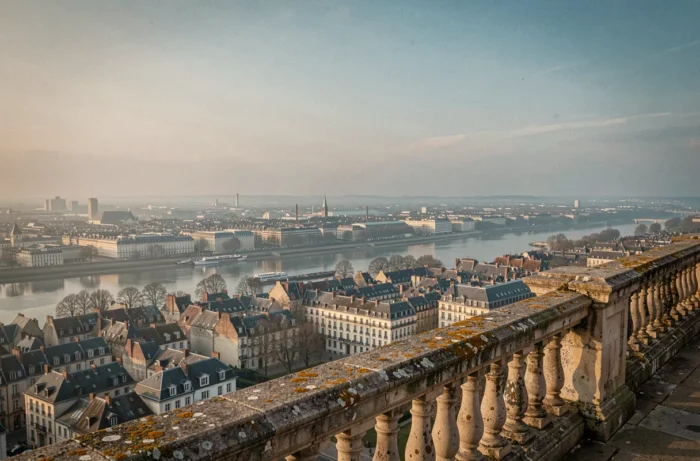
Butte Sainte-Anne rises above the ancient slopes of the Armorican Massif, west of Nantes city centre. This natural promontory overlooks the Loire and offers sweeping views of Île de Nantes, the village of Trentemoult and the still-active port facilities of Bas-Chantenay.
The Chantenay-Sainte-Anne neighbourhood, often compared to a Nantes version of Montmartre for its sloping lanes and village atmosphere, now stands at the crossroads of its working-class and maritime heritage and a major urban transformation project led by Nantes Métropole, with a target completion date of 2035.
Bas-Chantenay in transition: how the urban project is changing the hill
Bas-Chantenay, below the hill, is described by Nantes Métropole as a changing area with a strong maritime identity. The project aims to redevelop former industrial and port wastelands while maintaining an active economic hub. The project is scheduled for completion in 2035, which means several years of construction, cranes and changes to the landscape visible from the lookout.
For visitors climbing Butte Sainte-Anne in search of a panorama frozen in time, the reality is more nuanced. Views downstream along the Loire now include construction sites, hoardings and earthmoving equipment, layered against slate rooftops and old warehouses. This coexistence of heritage and urban renewal is part of the landscape today.
The maritime focus of the project is worth noting: Nantes Métropole highlights the area’s historic port function. From the hill, traces of this activity are still visible—quays, slipways and technical buildings—which give the panorama a character quite different from that of a simple tourist lookout. Watching a sunset in Chantenay, Nantes also means seeing a city reinvent itself before your eyes.
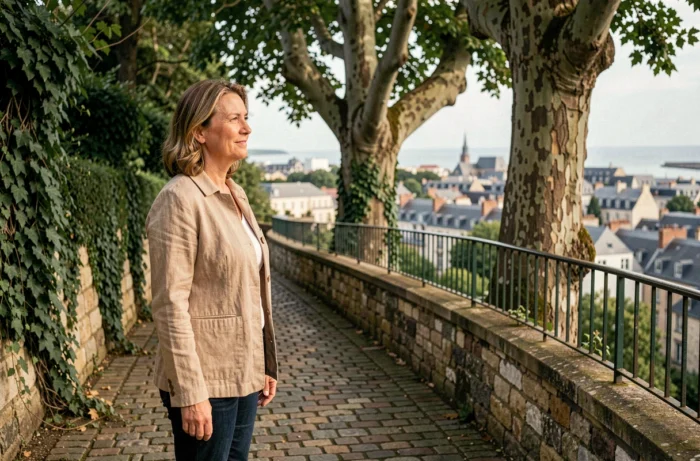
Views of the Loire from Butte Sainte-Anne: what you can really see
The main lookout is near the statue of Sainte-Anne, whose gaze is directed towards the Loire. From here, the view takes in Île de Nantes (the former shipyard site), the Hangar à Bananes on the opposite bank and, on a clear day, the colourful village of Trentemoult downstream.
To the east, the outlines of the city-centre buildings and Île de Nantes close off the horizon. To the west, the view follows the Loire towards the estuary, with the facilities of Bas-Chantenay in the foreground.
At sunset, the low western light illuminates the façades of Trentemoult and the surface of the river. The hill’s west-facing position makes it an ideal vantage point, which is the main reason for its reputation as a place to visit at the end of the day. The quality of the view does, however, depend on the season: in summer, the sun sets further to the northwest, while in winter it shifts towards the southwest, changing which stretch of river is lit.
Chantenay-Sainte-Anne neighbourhood: more than just a place for a stroll
Reducing the hill to a viewpoint would overlook what defines everyday life in the neighbourhood. Chantenay-Sainte-Anne functions like a village within the city, with local shops, cafés that have sprung up in recent years and a thriving community life.
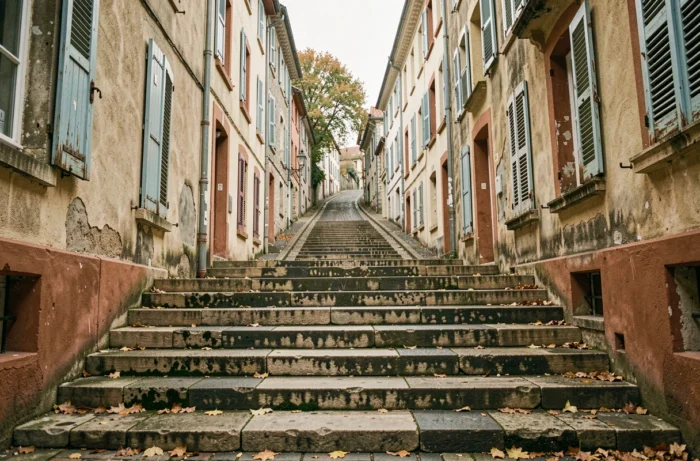
The stairways and paths winding across the hillside also serve as a place to exercise. The hill’s steep terrain is more than just a scenic asset: the neighbourhood’s slopes also attract people looking for urban sports, from stair runs to urban hikes.
The residential fabric still bears the mark of Chantenay’s working-class heritage. Once an independent commune, it became part of Nantes in the early 20th century. Low stone houses, inner courtyards and narrow passageways sit alongside recent renovations. This layering of architectural styles gives the lanes a character not found in neighbourhoods rebuilt after the war.
Jules Verne Museum and cultural trail on the hill
The Jules Verne Museum is housed in a 19th-century bourgeois residence overlooking the river. Its terrace offers a different panorama from the main lookout, with a closer view of the Loire and Île de Nantes. The proximity of the museum’s collections to the river views creates a direct link between Verne’s imagination and the landscape that inspired it.
The neighbourhood’s cultural trail extends beyond the museum. Several landmarks line the way:
- The Nantes Planetarium, a few minutes’ walk away, complements the scientific theme associated with Jules Verne and offers screenings beneath its dome.
- Street art murals scattered across the neighbourhood’s walls, regularly refreshing the visual landscape of its lanes.
- Jardin extraordinaire, a former quarry transformed into a landscaped park, accessible from the hill via sloping pedestrian paths.
Sunset at Butte Sainte-Anne: a panorama on borrowed time or in transition?
The question is worth asking: as construction in Bas-Chantenay gradually changes the foreground, is the hill still a good spot for sunset? The answer depends on what you’re looking for.
If you’re after an unchanging postcard view, the cranes and construction sites may disappoint. But the panorama from the hill has never been an untouched natural landscape: for decades, it has included industrial quays, warehouses and cargo ships. The current project is part of a long tradition of working landscapes.
What may eventually change is the skyline itself. New buildings below could partially block some lower views. The available information does not make it possible to determine exactly which sightlines will be affected, or how tall the future buildings will be in relation to the lookout.
For the next few years, the hill retains its main advantage: a natural elevation that buildings below cannot erase. The Armorican hillside provides enough height to see the river and the sky. What will change is the scenery in between, not the horizon.
Chantenay-Sainte-Anne is going through a period in which working-class heritage, urban projects and tourism intersect. The hill remains a rare vantage point in a major French city—a place where the river, industrial history and evening light coexist without artifice. The transformation of Bas-Chantenay will add another layer to this palimpsest without erasing those that came before.