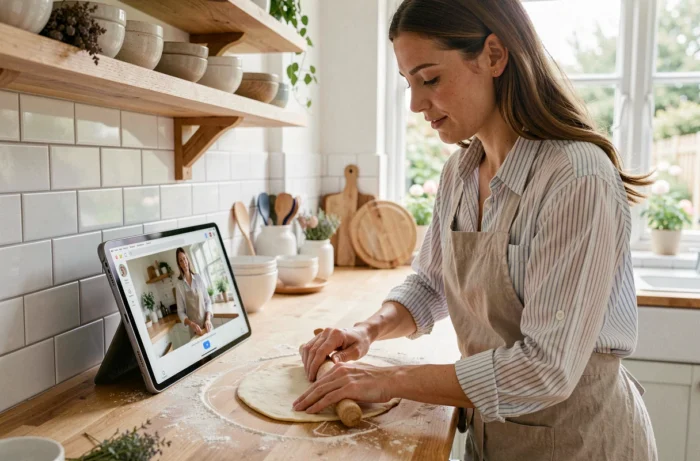
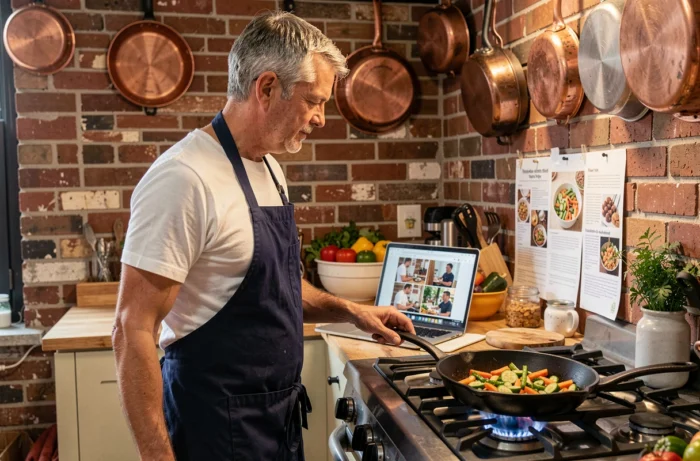
Cooking a dish by following a video on your kitchen screen has become second nature for many people. The problem arises when the lesson calls for equipment you can’t find in an ordinary cupboard or ingredients you’d never buy on a Tuesday night. Learning to cook online works as long as the format respects what makes home cooking so rewarding: improvising with what you have, adjusting quantities and taking the time to taste as you go.
Online cooking classes: how your own kitchen changes the learning experience
A workshop at a culinary school provides stainless steel worktops, professional convection ovens and pre-weighed ingredients. At home, your oven has its quirks, your scales may be at the back of a drawer, and the butter in your fridge might be from the day before yesterday.
This difference isn’t a drawback. It’s precisely what makes the learning useful in everyday life. Cooking with your own equipment grounds what you learn in reality. A cooking technique learned on your induction hob, with your own pan, is easy to repeat the next day.
The most structured online courses, including some that prepare students for the CAP Cuisine qualification, combine videos with practical exercises that are assessed and personalized feedback from a chef, sometimes over video call. This level of support shows that distance learning can go far beyond simply watching videos. The same principle applies to amateur cooks: a good course gets you cooking, not just watching.
You can also learn to cook with Les Petits Pois Sont Rouges through formats designed for everyday cooking, without an unrealistic shopping list.
Choosing an online cooking class for home cooks
Have you ever abandoned a recipe halfway through because it called for a siphon, powdered glucose or three different types of flour? Choosing the right course has a direct impact on how much you enjoy cooking at home.
Here are some practical criteria for distinguishing a useful course for home cooks from training aimed at a different audience:
- Recipes built around everyday ingredients: the course suggests alternatives when an ingredient isn’t available, rather than requiring a list of specialty purchases.
- A flexible pace, with no set schedule: you cook when you feel like it, not at a fixed time on a Tuesday at 7 p.m.
- Videos that show techniques from worktop height, rather than from above in a professional filming studio, so you can copy the posture and movements.
- The option to ask questions or send a photo of your results, even asynchronously: feedback, however brief, can correct mistakes before they become habits.
In France, the decree of 12 February 2024 updated the food hygiene training standards for commercial food service. These regulations apply to professionals. A course for home cooks doesn’t have to follow this framework. Amateur cooking lessons shouldn’t imitate professional training: if the curriculum covers HACCP or supplier traceability, it probably isn’t aimed at you.
Cooking with what you have: techniques and reducing food waste
Learning to cook at home also means learning to open the fridge and put together a meal with what’s inside. Two exercises often feature in approaches that combine home cooking with reducing food waste: adjusting quantities to what you actually eat, and creating a dish from leftovers or vegetables that are starting to wilt.
You don’t develop these habits by watching a chef work with fresh ingredients delivered that very morning. You develop them by practising in your own kitchen, with your own constraints.
Adjusting quantities without scales
Most home cooks don’t use scales every day. A good online course teaches visual cues: a portion of rice that fits in the palm of your hand, or a tablespoon of oil instead of a weight in grams. Visual cues help reduce waste more effectively than scales.
Putting together a meal with what’s in the fridge
Some courses offer a simple exercise: list three or four ingredients you have on hand, then follow a method for building a dish (protein, vegetable, starch, seasoning). This kind of practice develops cooking confidence faster than a collection of fixed recipes. You learn a way of thinking, not a list of instructions.
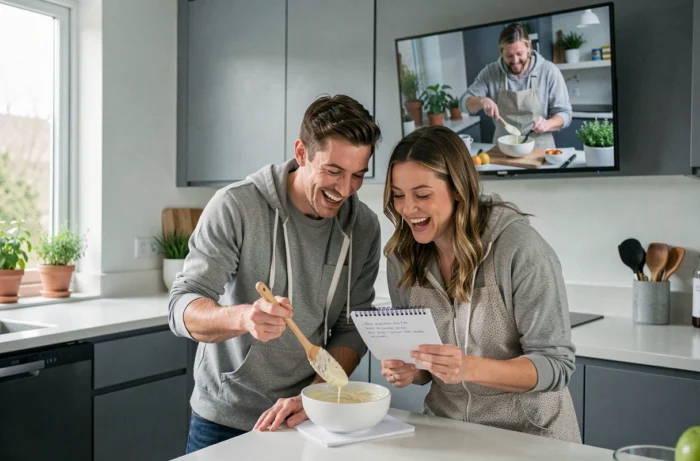
Pre-recorded video or video call with a chef: which format suits your goals?
The format of a course can radically change the experience. A pre-recorded video gives you complete freedom: pause, rewind and pick up again the next day. It’s the best option for people who cook for pleasure, without pressure to get a particular result.
A video call with a chef, on the other hand, offers real-time interaction. The chef can watch your technique, correct the angle of your knife and suggest adding salt at just the right moment. Live interaction can correct mistakes that a video can’t detect.
The right choice depends on your goal. If you want to improve specific techniques (deboning a chicken, making puff pastry successfully), feedback from a professional can speed up your progress. If you’re looking for inspiration to add variety to your weekday meals, short, well-structured videos are more than enough.
There’s also a hybrid option: pre-recorded lessons supplemented by occasional video calls where you can ask questions. This model combines the flexibility of video with the value of personal feedback, without requiring you to follow a set training schedule.
Keeping the joy of cooking while taking online classes
The main risk of learning online is turning cooking into a school exercise. Watch out for these three signs:
- You follow the recipe to the gram without ever tasting as you go.
- You feel frustrated when the result doesn’t look like the course photo.
- You no longer dare to cook without a video in front of you.
The goal of a course is to make you independent, not dependent. Here’s a good sign: after a few weeks, you start adapting the recipes you’ve learned, swapping one ingredient for another and adjusting the seasoning to suit your taste.
Learning to cook online can’t replace the pleasure of watching a sauce reduce, feeling dough with just the right elasticity, or tasting and adjusting as you go. A course gives you a few pointers. Cooking remains a physical, sensory and personal experience—and that’s exactly why we love it.