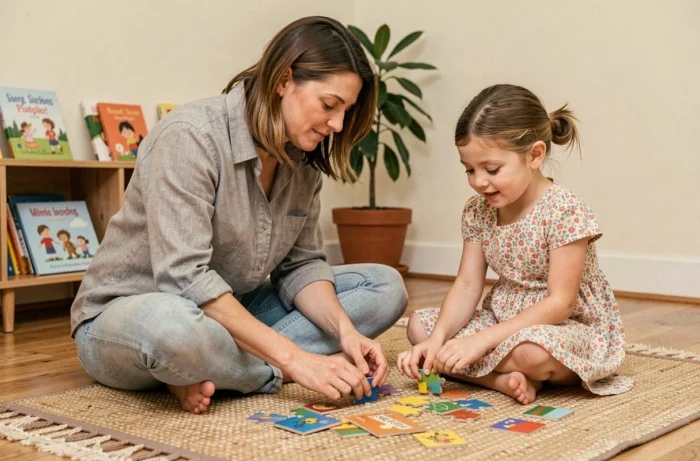
Supporting children day to day is about more than following a list of best practices found online. Every family has its own constraints, routines and doubts. Parenting advice is more effective when it takes real-life circumstances into account rather than relying on a theoretical model.
Local support for parents: when online advice is no longer enough
Have you ever spent an hour searching for an answer on a forum, only to end up more confused than before? Generic parenting advice can only go so far. When you’re dealing with a child who refuses to go to school, recurring arguments over homework or ongoing emotional difficulties, personal, local support can make all the difference.
Parent-Child Welcome Centres (LAEP) offer free drop-in spaces where parents and children can spend time together, with early childhood professionals on hand. Community centres also run group workshops on specific topics, such as managing emotions, nutrition and sleep.
These services are available in most towns and cities, yet remain underused. Often, the first step is simply walking into a place where you can talk openly, without judgment, with trained professionals. For more information on child development and family life, resources such as children on Maman du Quotidien complement this approach with content tailored to the realities of family life.

Screens and children: looking beyond the number of minutes
Screens are a major source of concern for many parents. The usual response is to set a time limit and stick to it. While this approach makes sense, it overlooks a more important factor: what a child does on a screen matters just as much as how long they spend on it.
The Family and Parenting Support Programme (PSFP) now includes workshops on screen use. The aim is not to demonize digital media, but to help families distinguish between passive use (watching videos without interacting) and active use (creating content or playing educational games with an adult).
Three practical guidelines for managing digital use
- Watch together: a cartoon watched with a parent becomes a conversation starter, not an electronic babysitter. Talking about what’s happening on screen helps develop language skills.
- Create screen-free zones: keep bedrooms and the dining table as screen-free spaces. Setting boundaries around where screens can be used is easier to stick to than using a timer.
- Suggest another activity before turning the screen off: a child who knows what they’ll do next is more likely to accept screen time ending.
The key is not prohibition, but guidance. A parent who spends ten minutes playing an educational tablet game with their child does more than one who bans screens without offering an alternative.
Building independence: everyday tasks as learning opportunities
Independence can’t be imposed. It develops through small situations repeated every day. Packing a schoolbag, choosing clothes, setting the table: these ordinary tasks are learning opportunities that many parents underestimate.
Have you noticed that a child becomes more confident when given a simple task? That’s no coincidence. Giving children age-appropriate responsibilities builds self-confidence. A four-year-old can put away their shoes. A seven-year-old can prepare their own snack.
Adjusting expectations to each child’s pace
A common pitfall is making comparisons. The child next door can tie their shoelaces, but yours can’t yet. This creates frustration for everyone. Every child develops at their own pace.
Effective support is based on two simple principles. First: let your child try, even if the result isn’t perfect. A poorly made bed by a six-year-old is better than one made by a rushed adult. Second: talk about progress rather than pointing out mistakes. “You put your socks on all by yourself” means more than “that’s still not quite right.”
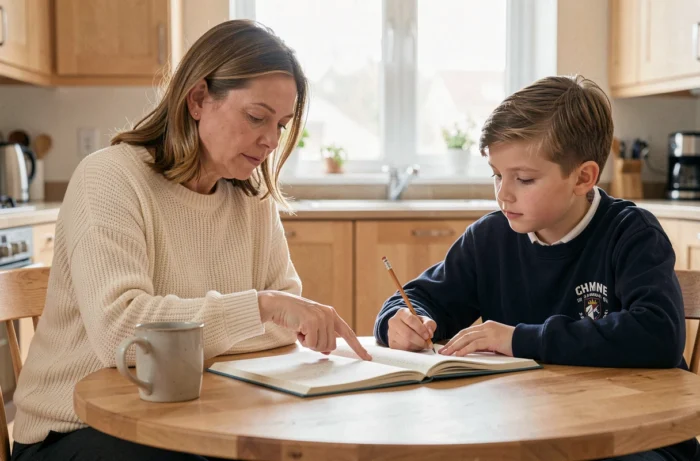
Parenting and family networks: overcoming isolation
The mental load of parenting grows heavier when you have to make every decision alone. Yet parenting has long relied on a wider support network: grandparents, neighbours, teachers and childcare professionals. This network has weakened as families have become more geographically dispersed and people have less time available.
Rebuilding a support network starts with small steps. Attend a workshop at a community centre, talk to other parents at school pick-up or join a local parenting group: these real connections help ease the feeling that you have to face challenges alone.
The First 1,000 Days policy provides a framework for support throughout a child’s early years. Services such as Cap’parents are specifically designed for parents with disabilities. This framework also includes strengthening support for parents experiencing psychological distress.
When to consult a professional
Practical advice from other parents has its limits. Certain signs call for professional guidance:
- Persistent sleep problems in a child (lasting several weeks or more) that disrupt family life.
- A sudden change in behaviour: withdrawal, sudden aggression or a marked refusal to eat.
- Parental exhaustion that makes it difficult to function day to day, accompanied by constant irritability or a loss of enjoyment in the relationship with your child.
- Learning difficulties identified by a teacher and also observed at home.
Your family doctor, a maternal and child health centre (PMI) or a child psychologist are good first points of contact. Seeking help isn’t an admission of failure; it’s a parenting skill in its own right.
Supporting a child day to day means accepting that the answers won’t always be found in an article or a book. Often, the best resources are close at hand: a local professional, another parent going through the same stage, or a place to talk just ten minutes from home. The best parenting advice is advice that takes your reality into account, not an ideal.