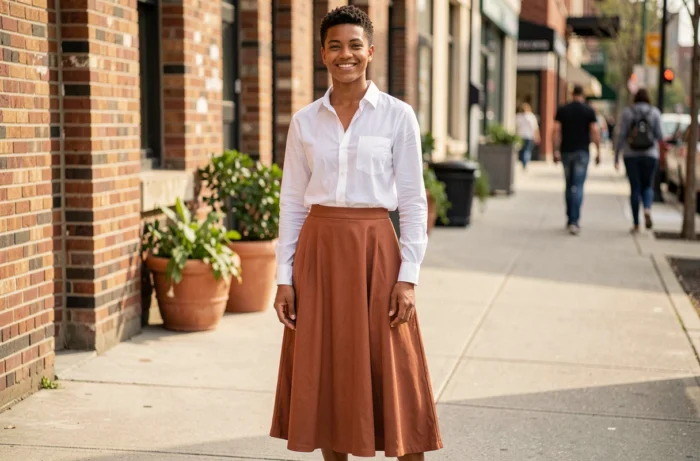
The skirt is one of the oldest garments in the history of clothing. For centuries, people of all genders wore skirts before Western conventions reserved them for women. Today, non-binary people are reclaiming the garment to express an identity that is neither exclusively masculine nor feminine.
This movement is more than a passing trend: it is part of a broader challenge to gendered clothing categories, shaped by both fashion and individual experiences.
Skirts and non-binary identity: a garment that goes beyond the wardrobe
Associating skirts with femininity is a cultural reflex, not a universal truth. The sarong in Southeast Asia, the Scottish kilt and the loincloth in West Africa are all draped garments worn by men without their gender being questioned. For a non-binary person, what changes is the symbolic weight of wearing a skirt in a Western context, where most retailers still physically separate their men’s and women’s departments.
For many, choosing a skirt isn’t about looking feminine or masculine. The garment becomes a space where gender expression doesn’t have to fit any predefined category. A midi skirt worn with boots and an oversized sweatshirt says nothing specific about the wearer’s gender—and that’s precisely the point.
On this subject, skirts and non-binary people are the focus of a discussion that goes far beyond simple styling advice.
Social context and wearing a skirt: where clothing freedom ends
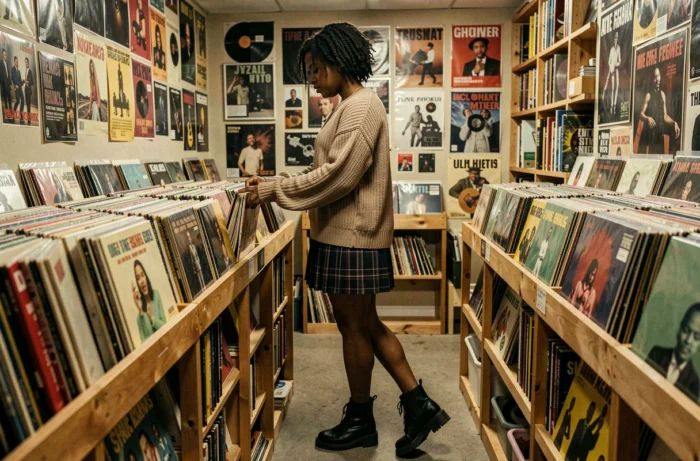
Wearing a skirt to express your style as a non-binary person can have very different effects depending on where you are. A survey of LGBTIQ young people in rural areas found that school remains a place where many don’t feel safe. Family settings and leisure or sports venues are also cited as places where someone’s appearance can prompt comments or lead to rejection.
This reality calls for a more nuanced discussion of clothing freedom. Wearing a long skirt to a festival or a queer community space doesn’t carry the same social weight as wearing one to a rural high school or on a sports field. Those affected know this and often adapt their choices to the setting—a mental burden that style guides rarely mention.
The school setting: a special case
On September 27, 2024, the Conseil d’État rejected appeals against the ban on abayas in public schools. This decision concerns garments covered by rules on religious symbols: it does not amount to a general ban on skirts in schools. The distinction needs to be made clear, as confusion between the regulation of religious symbols and gendered clothing freedom fuels recurring misunderstandings.
Creating a non-binary style with a skirt: practical tips
Competitors often offer outfit lists organized by mood (soft, bold, minimalist). The problem with this approach is that it reproduces a catalogue without addressing the real practical challenges.
The problem with gendered sizing
Most skirts available in stores are designed for so-called feminine body shapes: high waists, wider hips and lengths tailored to a particular height. For someone assigned male at birth with narrower hips and longer legs, finding a skirt that fits well often means browsing several departments or turning to independent brands that offer gender-neutral sizing with measurement guides in centimeters.
Here are a few useful tips for choosing a skirt without relying on men’s or women’s categories:
- Measure your waist and hips in centimeters, then compare them with size charts, ignoring the “men’s” or “women’s” label
- Choose elasticated or drawstring waists, which accommodate a range of body shapes without alterations
- Try wrap skirts, whose adjustable fastening works for almost any silhouette
The role of fabrics and proportions
A fluid jersey skirt creates a different effect from a structured denim skirt. For a non-binary person looking to blur the lines rather than reverse them, fabric matters just as much as cut. A stiff fabric (canvas, denim) creates a more angular silhouette, while a soft fabric (viscose, jersey) follows the body’s shape.
Proportions matter too. A midi skirt paired with a loose top creates a gender-neutral silhouette. A short skirt worn with an oversized leather jacket creates a contrast that defies categories. The key isn’t to follow a rule, but to understand how different volumes work together on the body.
Non-binary fashion and the clothing industry: a still-fragmented market
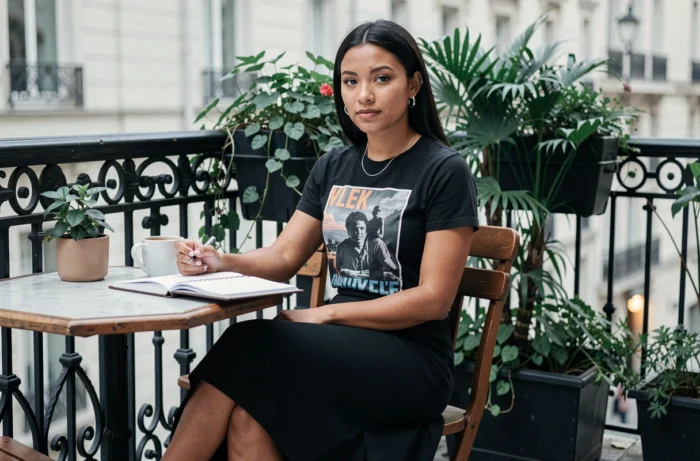
A few brands promote a genderless or unisex approach, but most unisex collections still have a distinctly masculine look in their cuts: straight-cut T-shirts, loose trousers and neutral colors. Skirts, seen as too strongly gendered, rarely feature in these collections. As a result, non-binary people who want to wear a skirt often have to shop in the women’s department, which can feel at odds with their identity.
The secondhand market and independent designers offer more options. In these spaces, clothes circulate without gender labels, and descriptions focus on measurements rather than men’s or women’s categories. This is a space where a skirt can simply be a garment, without being assigned a gender.
There is not enough data to accurately measure the size of this market. Major retailers don’t publish figures on skirt sales to non-binary customers, and consumer surveys don’t always break down results by gender identity. This statistical blind spot makes it impossible to know whether demand is actually growing or whether media visibility is creating the impression of a mass movement.
For non-binary people, the skirt remains a garment with a dual significance: it can express personal style while also requiring them to navigate a society whose structures (departments, sizing, changing rooms) have yet to adapt to gender diversity. Progress is being made in independent fashion and community spaces, but everyday life still involves compromises that discussions of clothing freedom tend to downplay.