
The KIVIK seat cushion isn’t just a simple, interchangeable block of foam. Its internal structure combines high-resilience foam, polyurethane foam, felt and pocket springs. Any attempt to replace the filling without taking this construction into account risks shifting the problem rather than solving it.
Diagnosing KIVIK sagging: springs, foam or frame
Before ordering anything, you need to identify the cause of the sagging. Three distinct issues can produce similar symptoms, but each calls for a different solution.
If a cushion sinks in the middle but remains firm around the edges, the polyurethane foam has likely deteriorated. The high-resilience foam around the perimeter lasts longer, creating the characteristic dip. In this case, replacing the central foam block is enough.
If the entire seat sinks evenly, the pocket spring unit is probably the problem. Adding foam won’t compensate for a broken or sagging spring: the extra padding will hide the dip for a few weeks before the same issue returns. You’ll need to remove the cover, feel the spring unit and locate any soft spots.
The third scenario involves the sofa frame itself (webbing or frame slats). If the frame flexes when the cushion is removed, no amount of KIVIK sofa reupholstery will fix the problem. We recommend testing the frame’s rigidity by pressing firmly in the center with the cushion removed.
Replacement foam for a KIVIK sofa: density and custom cutting
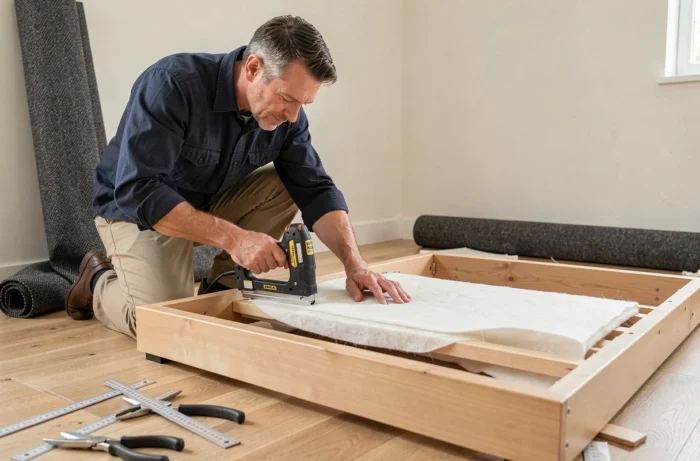
The materials and dimensions of the KIVIK vary depending on the model version. An IKEA product sheet for the compact KIVIK lists a different high-resilience foam density from the standard KIVIK. Measuring the cushion in question is more reliable than following a generic guide found online.
Choosing the right density
Density determines durability, not immediate comfort. Low-density foam may feel soft when it arrives, but it will sag within a few months of daily use. For a sofa seat, high-density foam (such as HR foam) is the minimum viable option.
Firmness, on the other hand, determines how the foam feels. Dense foam can be soft or firm depending on its formulation. To replicate the original feel of the KIVIK, which has a relatively enveloping seat, aim for medium firmness.
Custom-cut foam and compatible KIVIK inserts
Specialist suppliers offer custom-cut inserts for IKEA sofas, including the KIVIK. These are not official IKEA parts. Before ordering, check the following three things:
- Measure the inside of the cover (length, width and thickness), not the outside of the cushion, as the cover compresses the foam by a few centimeters
- Check whether the original cushion contains a pocket spring unit, as a foam-only insert will noticeably change the feel
- Compare the proposed construction (foam only, foam + felt, foam + fiber) with the original materials listed on the IKEA product sheet for your exact model
Replacing KIVIK cushion filling, step by step
The KIVIK is a sofa with removable covers. That’s its main advantage for this kind of repair: there’s no need to sew or remove staples.
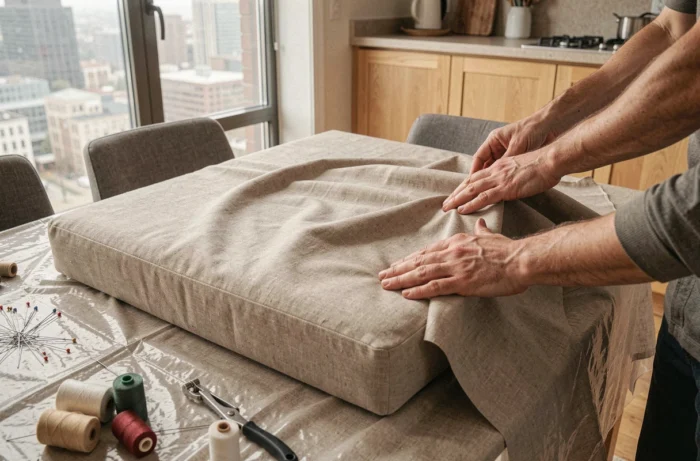
First, remove the seat and back cushions. KIVIK covers have zippers. Open them fully and take out the filling. Place the old block next to the new one to compare their dimensions before inserting it.
Insert the new block starting at one corner, then gradually work it toward the opposite corner. It may be tempting to fold the foam in half to force it into the cover, but this can deform the cells in the HR foam. It’s better to compress the block slightly along its thickness, slide one side in, then unfold it.
Back cushions have a different construction: polyester fiber and soft foam, with no springs. Sagging back cushions can often be fixed by adding a layer of polyester batting between the existing foam and the cover. This extra layer restores the cushion’s fullness without changing its firmness.
Aftercare: extend the life of KIVIK cushions
New filling will sag again in the same amount of time if your usage habits don’t change. Turn or rotate the seat cushions every two weeks to distribute wear evenly. On a three-seat KIVIK, the side cushions are under less pressure than the center cushion, so swapping them regularly helps even out the wear.
The KIVIK’s washable cover makes maintenance easier, but washing it too often at high temperatures can shrink the fabric and compress the filling. Follow the instructions on the IKEA label to preserve the original dimensions.
One final point that’s often overlooked: the frame webbing stretches over time. Even after a perfect upholstery repair, a loose strap creates a low spot beneath the cushion. On the KIVIK, you can access the webbing by turning the sofa over. Retightening it or replacing it with elastic upholstery webbing takes about 20 minutes and completes the cushion renovation.
The KIVIK remains one of the few IKEA models whose removable-cover design and availability of compatible inserts make reupholstery accessible without specialist upholstery tools. The only requirement is to correctly diagnose the cause of the sagging before working on the foam.